























 Sep
08
Types of Tobacco Pipes: A Complete UK Guide
- 8th September 2026
- 0 Comment(s)
Choosing a first pipe can feel like stepping into unfamiliar territory: dozens of shapes, several materials, and a vocabulary all of its own. This guide sets out the main types of smoking pipes available today, from traditional briar pipes to mineral meerschaum pipes, corn cob pipes, and long-stemmed churchwardens, so that you can understand what separates one from another before making a decision.
You might have inherited a pipe, or you might simply be weighing up options before a first purchase; either way, the sections below explain the materials, terminology, and basic technique in plain, factual terms. This is educational information from Mcgahey the Tobacconist: nothing here is intended to encourage smoking, and where relevant we point to independent NHS support for anyone who wants to stop.
What is a tobacco pipe?
A tobacco pipe is a device for burning pipe tobacco in an enclosed bowl and drawing the resulting smoke through a stem to a mouthpiece. The smoking pipes UK shops sell today trace back centuries: archaeological evidence places pipe smoking among indigenous peoples of the Americas before Europeans encountered the practice in the 15th and 16th centuries, after which it spread across Europe, Africa and Asia and diversified into the designs covered below.
The basic anatomy stays consistent across almost every design. The bowl holds the tobacco as it burns; the shank connects bowl to stem; the stem carries smoke away from the bowl; and the mouthpiece, sometimes called the bit, rests between the teeth or lips. The pipe tobacco UK smokers buy has traditionally come from specialist tobacconists rather than general retailers, and McGahey stocks pipe tobacco across a range of blends.
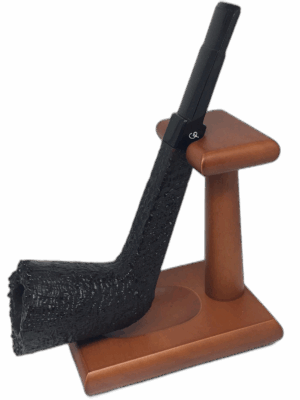
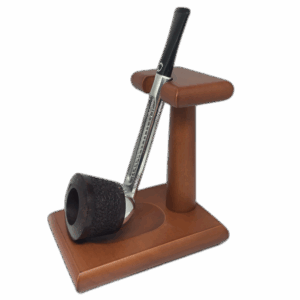
Charatan – Relief XL
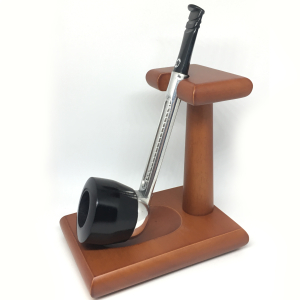
Falcon – Standard straight with dental stem
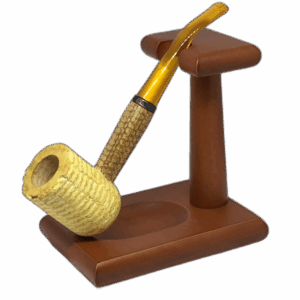
Missouri Meerschaum- Original corn Cob

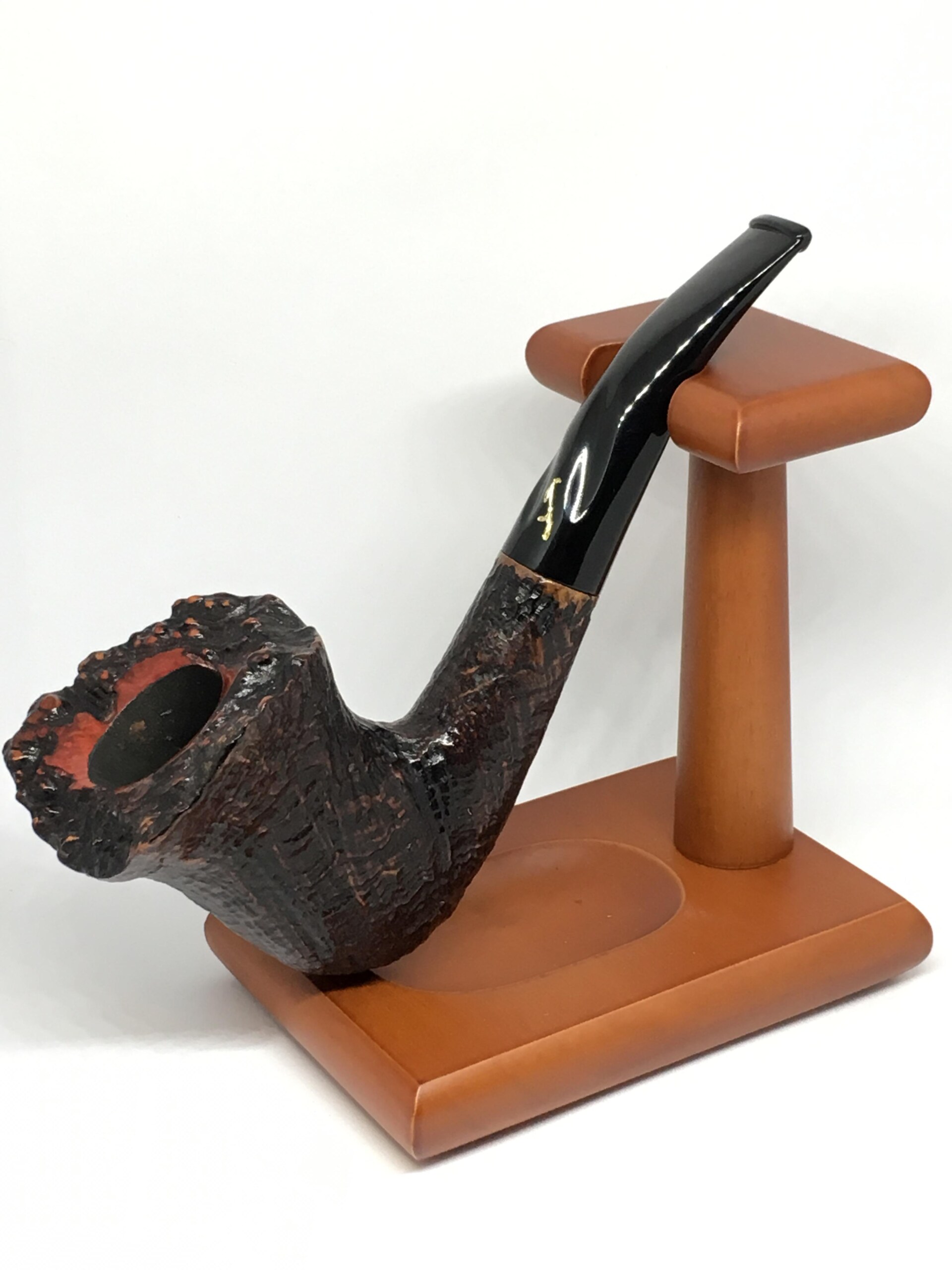
Savinelli – Autograph Sandblast Plateaux 2
Briar pipes: the traditional choice
Most pipes sold today, including most of the pipes McGahey lists as briar pipes, are carved from briar: the root burl of the tree heath, Erica arborea, a shrub native to the Mediterranean coastline and parts of the Balkans. Briar became the dominant material for tobacco pipes in the second half of the 19th century, replacing clay and early wooden alternatives, for three reasons: the root burl withstands sustained heat without cracking, its dense grain gives each pipe a distinctive figure once cut and sanded, and a well made briar pipe can last for decades.
A new briar pipe usually needs a breaking in period before it performs at its best. During the first several smokes, a thin layer of carbon, often called cake, builds up gradually across the inside of the bowl, insulating the wood from the direct heat of burning tobacco. Without it, the bare wood is more exposed to scorching, and to a burn out: a crack or hole caused by heat reaching the bowl wall.
Readers interested in a specific maker's take on the briar pipe can see McGahey's coverage of Rattray's briar pipes, a Scottish pipe maker with a long standing reputation in the UK market.
Meerschaum pipes
Not every pipe is carved from wood. Meerschaum pipes are cut from a soft, porous mineral, hydrated magnesium silicate, mined chiefly in the Eskisehir region of Turkey and known since the 18th century for its pale, chalk like appearance. The name itself is German for sea foam, a reference to its pale colour when first quarried.
Meerschaum smokes noticeably cooler and drier than briar, because the porous mineral absorbs moisture from the smoke as it travels through the bowl. Over repeated use, an untreated meerschaum pipe gradually changes colour: the pale stone deepens toward amber, honey or reddish brown tones, a patina collectors often regard as part of the material's appeal. This same porosity makes meerschaum considerably more fragile than briar or corn cob: a dropped meerschaum pipe is far more likely to chip or crack. Meerschaum is also the material most associated with ornamental and figural carving, from plain bowls to elaborate sculpted designs, since the stone is soft enough to carve in fine detail before it is finished and waxed.
Corn cob pipes
What is the simplest way to try pipe smoking without a significant outlay? The answer is a corn cob pipe. Corn cob pipes are made from the dried, hollowed cob of specially bred corn varieties, most famously by the Missouri Meerschaum Company in the United States, which has produced cob pipes commercially since 1869. The cob forms the bowl and is typically fitted with a separate shank and stem made of wood or a composite material.
Cob pipes cost a fraction of an equivalent briar or meerschaum pipe, which is precisely why many tobacconists, McGahey included, suggest them as a first purchase: a new pipe smoker can learn packing, lighting and pacing without worrying about damaging an expensive one. Cob pipes also smoke reasonably cool straight away, without needing a breaking in period the way briar does, though they are generally considered less durable and are often treated as a lower cost, replaceable option rather than a lifetime pipe.
Churchwarden pipes
Picture a pipe with a stem long enough to rest against the chest while the bowl sits well clear of the face: that is the defining silhouette of the churchwarden pipe. Churchwarden pipes are built around an unusually long stem, sometimes 30 centimetres or more, connected to a relatively small bowl. The extended stem gives smoke a longer path to cool before reaching the mouthpiece, which many smokers find gentler than a short stemmed pipe.
The churchwarden pipe UK smokers may recognise from film and television owes much of its visibility to fiction rather than everyday use. Both the churchwarden and the calabash style pipe are strongly associated with screen and stage depictions of Sherlock Holmes, and the churchwarden in particular is tied to the character of Gandalf in Peter Jackson's film adaptations of The Lord of the Rings. These are noted purely as points of cultural reference, not as any suggestion that such associations reflect typical use.
Calabash pipes
The calabash pipe takes its name and curved shape from the calabash gourd, though most modern versions are manufactured from wood or moulded materials rather than an actual dried gourd shell. The design's downward curve and large air chamber below the bowl are intended to cool and dry the smoke before it reaches the mouthpiece, a similar principle to the churchwarden's long stem, achieved here through shape rather than length.
It is the calabash, more than the churchwarden, that is most commonly pictured in popular depictions of Sherlock Holmes, a detail worth setting straight: the association with a curved calabash pipe is generally traced to the American actor William Gillette, whose stage portrayals of Holmes in the early 1900s popularised the image, rather than to Arthur Conan Doyle's original stories. More detail on what Conan Doyle actually wrote follows in the FAQ below.
Estate (pre-owned) pipes
Age is not automatically a mark against a pipe. In pipe collecting, the term estate pipe describes any previously owned pipe being resold, typically cleaned and, where necessary, restored by a specialist rather than sold exactly as found. Estate pipes UK collectors buy and sell range from recently used briar pipes through to genuinely old pieces decades beyond their original production run, and pricing reflects condition, maker and rarity rather than age alone.
Buying second hand carries specific things worth checking. Bowl condition matters most: look for cracks, burn throughs near the rim, or a chamber reamed unevenly. Stem oxidation is common on older vulcanite stems, which can develop a greenish or brownish discolouration; this is largely cosmetic and can often be polished out, but it is worth factoring into price. Cake buildup should be even, since a thick, cracked cake can hide damage to the bowl wall underneath. Provenance, a clear account of the pipe's maker, age and prior ownership, adds confidence and matters considerably to collectors.
A properly cleaned estate pipe is not inherently inferior to a new one. Some collectors consider older briar to smoke particularly well because of its age, though this remains opinion rather than settled fact.
How to choose your first pipe
Which pipe should you actually buy first? A handful of practical factors make the decision easier. Bowl size and chamber shape affect how long a bowl of tobacco lasts and how it burns: a narrow, tall chamber burns differently to a wide, shallow one, and people often find a medium sized, straight sided chamber the most forgiving to learn on.
Stem material is a second consideration. Vulcanite, a hardened rubber, has a traditional soft feel against the teeth but can oxidise and need occasional polishing, as noted above. Acrylic stems resist oxidation and keep their colour for longer, though some smokers find them harder and less comfortable to bite gently.
Budget tiers vary widely. Corn cob pipes sit at the lower end; briar pipes span a wide range from factory made models to hand finished pieces from established makers; meerschaum pipes, particularly carved ones, often sit toward the upper end because of the labour involved in shaping the stone. Recognised pipe makers people commonly encounter include Peterson, Savinelli, Stanwell, Charatan, Falcon, Dr Plumb, Rattray's and Dunhill. McGahey stocks a range of pipes across several price tiers.
Filtered versus unfiltered is the final choice. Filtered pipes hold a small chamber in the shank for a pipe filter, intended to catch moisture before it reaches the mouthpiece; unfiltered pipes rely on technique and design alone to keep the draw dry.
Caring for your pipe
A pipe that is never cleaned degrades faster and smokes less pleasantly with every use. After each smoke, running a pipe cleaner, a thin, fluffy coated wire, through the stem and shank removes residual moisture before it can sour the wood. Many smokers keep a stock of pipe filters alongside their pipe cleaners for the same reason, since a filter absorbs some moisture during the smoke itself, reducing what needs cleaning out afterwards.
Reaming, scraping excess carbon cake from the bowl, should happen periodically using a purpose made reamer, keeping the cake to an even thickness of around a millimetre or two. Left unreamed, a thick cake can crack and damage the bowl wall beneath it, echoing the risk described earlier.
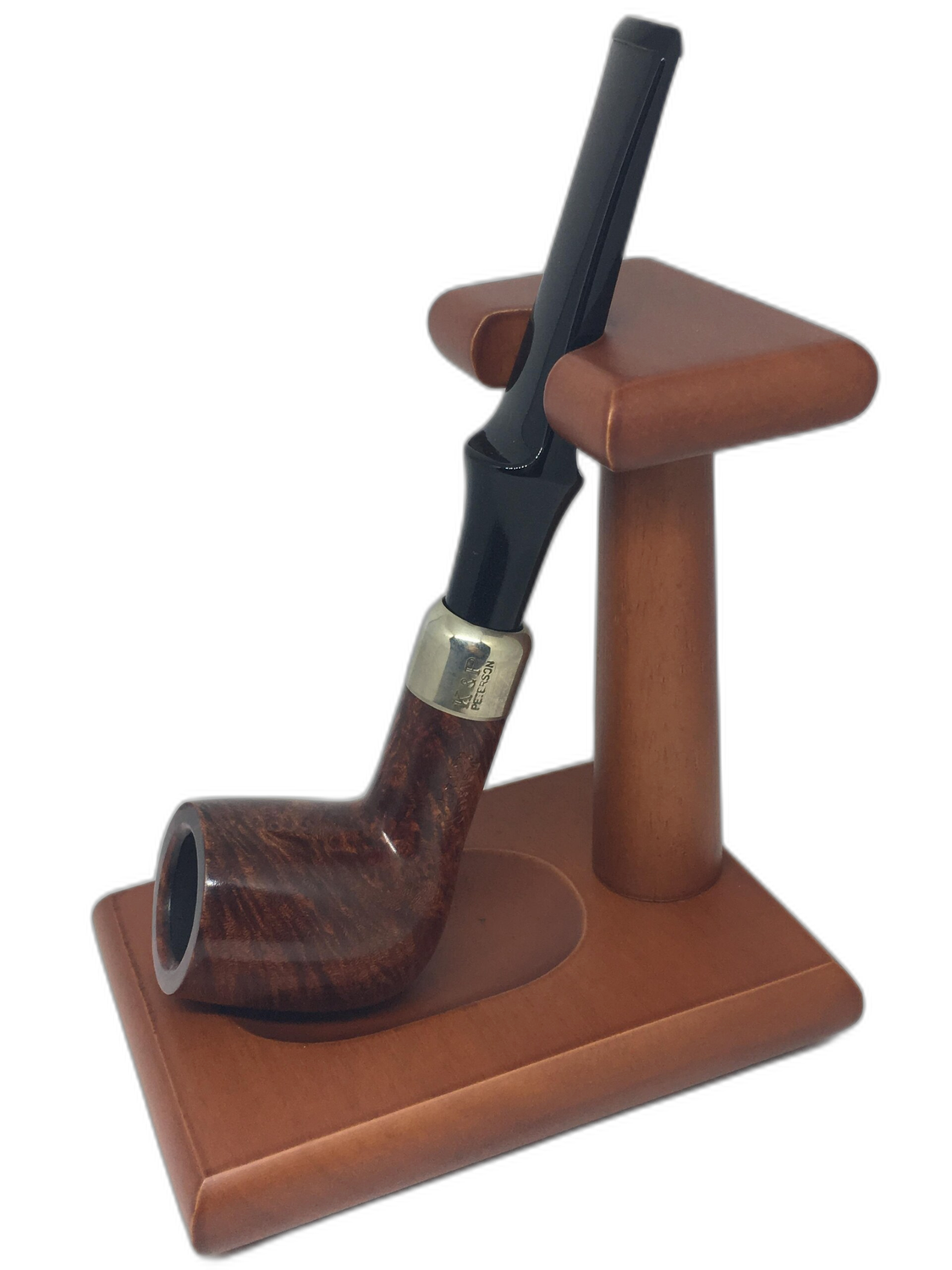
Smokers who own more than one pipe generally rotate between them, resting each pipe a day or two so residual moisture dries out before it is smoked again. This habit does more for a briar pipe's long term condition than almost any other, since briar smoked continuously without rest develops a persistently damp, sour taste far sooner than a rested pipe. Storage matters too: a pipe stand or rack that supports the bowl and keeps the stem clear of pressure prevents warping. McGahey's look at White Elephant pipe tobacco covers one established option for those exploring tobacco choices.
Frequently asked questions
What's the difference between a briar pipe and a meerschaum pipe?
Briar is a dense wood valued for heat resistance and durability, developing a protective carbon cake inside the bowl over time. Meerschaum is a soft, porous mineral that smokes cooler and drier, changes colour with use, and is more fragile, better suited to careful use than everyday handling.
Do I need to break in a new briar pipe?
Yes. A new briar pipe benefits from a gradual break in during which a thin, even layer of carbon cake builds up inside the bowl, insulating the wood from direct heat. Without it, the bare briar is more exposed to scorching and, in extreme cases, cracking through the bowl wall.
What pipe did Sherlock Holmes smoke?
The curved calabash pipe most associated with Sherlock Holmes is commonly documented as a stage and screen convention rather than a detail from Arthur Conan Doyle's original stories, generally traced to the American actor William Gillette, whose early 1900s stage portrayals of Holmes popularised the image. In Conan Doyle's text, Holmes is instead described smoking a briar pipe, a cherrywood pipe and a clay pipe, depending on the story.
How long do briar pipes last?
With proper care, meaning a measured break in, periodic reaming, cleaning and rotation between smokes, a briar pipe can reasonably be expected to last decades, and many collectors own briar pipes considerably older than that which remain fully usable.
Are estate (second hand) pipes safe to smoke?
Yes, provided they have been properly cleaned and, where necessary, restored before sale. Before buying, check the bowl for cracks or burn throughs, examine the stem for oxidation, look at the chamber cake for even thickness, and where possible ask about the pipe's provenance.
Resources
- The Conan Doyle Collection, "Three Pipes" (Cabinet of Curiosities). Confirms the three pipes described in Arthur Conan Doyle's original Sherlock Holmes stories: a black clay pipe, a briar and a cherrywood. https://www.conandoylecollection.com/conan-doyle/you-dont-know-sherlock-holmes-yet/cabinet-of-curiosities/three-pipes
- Smokingpipes.com, "A 3 Pipe Problem: On the Evolution of the Detective's Pipe." Covers the calabash pipe's origin in William Gillette's early 1900s stage portrayals of Holmes. https://www.smokingpipes.com/smokingpipesblog/single.cfm/post/pipe-problem-the-evolution-the-detectives-pipe
- Pipedia, "The Mysteries of the Briar Break-in Process." Reference for the carbon cake formation and break-in process described above. https://pipedia.org/wiki/The_Mysteries_of_the_Briar_Break-in_Process
- Kew Science, Plants of the World Online, "Erica arborea L." Botanical reference for briar's source plant and native range. https://powo.science.kew.org/taxon/urn:lsid:ipni.org:names:328204-1
- Pipedia, "Meerschaum." Reference for meerschaum's mineral composition, Eskisehir origin and etymology. https://pipedia.org/wiki/Meerschaum
- Missouri Meerschaum Company, "Our History." Company history and the 1869 founding date for commercial corn cob pipe production. https://corncobpipe.com/our-history/
Conclusion
Choosing between a briar pipe, a meerschaum pipe, a corn cob pipe, or a longer stemmed design such as a churchwarden or calabash pipe comes down to budget, the care you are willing to put into cleaning and rotation, and personal preference once you have tried a few. None of this changes the basic facts about tobacco use, and this guide is intended purely as factual, educational background on pipes and pipe tobacco, not any encouragement to take up or continue smoking.