












 Sep
08
Cigars Guide: How to Choose, Store and Cut Your First Cigar
- 8th September 2026
- 0 Comment(s)
Buying a first cigar involves more decisions than most newcomers expect: size, origin, strength, the right cutter, the right storage. None of these decisions are complicated once explained, but retailers rarely set them out in one place.
This guide from Mcgahey the Tobacconist covers what a cigar actually is, how to choose a size and strength, how to cut and light a cigar correctly, and how to store cigars so they stay in good condition. It is written as factual, educational information for adult consumers who have already decided to buy a cigar, not as encouragement to take up smoking. Tobacco use carries recognised health risks regardless of the product, and anyone who currently smokes and wants support to stop can contact the NHS Stop Smoking service, referenced again below.
What is a cigar, and how is it different from a cigarette?
A cigar is a roll of whole-leaf tobacco, wrapped in tobacco leaf rather than paper. A cigarette, by contrast, is shredded or processed tobacco rolled in paper, almost always designed for the smoke to be inhaled into the lungs. That structural difference explains most of the practical differences covered in this guide: cigars are typically smoked occasionally rather than daily, over a longer period per cigar, and the smoke is generally drawn into the mouth rather than inhaled, a point covered in more detail further down.

Buenaventura Mini BV Maduro
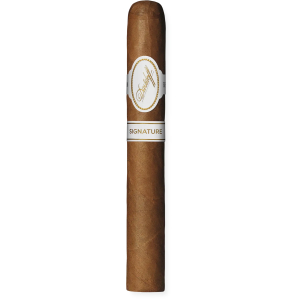
Davidoff Signature 2000
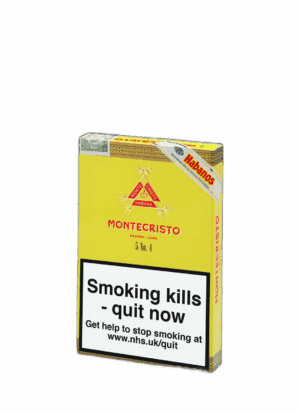
Montecristo No4 – 5 Box

Romeo Y Julieta No 3 (Tubed)
Choosing your first cigar
Size and shape. Cigars are sold in a range of standard sizes, known as vitolas, defined by length and ring gauge (diameter, measured in 64ths of an inch). A robusto is short and thick, typically around five inches with a wide ring gauge, and burns in roughly 45 minutes to an hour.
A corona is longer and narrower, historically the reference size against which others are measured, with a similar smoking time despite the different proportions. A churchill runs longer again, around seven inches, and takes an hour or more to smoke. A torpedo keeps a wide ring gauge through most of its length before tapering to a pointed cap. None of these is objectively better; size mainly determines how long a cigar takes to smoke and how much tobacco it contains, not its quality.
Cuban versus New World. Cuban cigars are grown, fermented and rolled in Cuba, using tobacco and curing methods with a documented history stretching back centuries. New World cigars are grown and rolled elsewhere, commonly the Dominican Republic, Nicaragua or Honduras, often using seed originally derived from Cuban tobacco planted in different soil and climate conditions, which produces a different result. A common point of confusion is worth addressing directly: the long-standing US trade embargo restricting Cuban cigars has never applied to the UK. Cuban cigars have always been legally available to UK buyers, including through McGahey's Cuban cigar range, alongside New World cigars from the regions above.
Strength. Cigars are generally classified as mild, medium or full, based on the tobacco blend rather than size or colour. Consider a common outcome: a first-time buyer chooses the largest, darkest cigar on the shelf on the assumption that bigger means better, and finds it far more intense than expected within the first few minutes. Wrapper colour is not a reliable guide to strength, and a large ring gauge does not automatically mean a stronger blend; strength comes from the tobacco itself. For that reason, most tobacconists recommend a mild to medium cigar as a first purchase, regardless of its physical size.
Myth versus reality: it is a common assumption that a bigger cigar is automatically a stronger one. In practice, size chiefly affects smoking time and the total volume of tobacco, while strength is set by the blend.
How to cut a cigar
A cigar that has been cut badly is difficult to enjoy properly no matter how good the tobacco inside it is, since a poor cut affects the draw for the entire length of the smoke. Most cigars are sold with a closed cap at the head, the end placed in the mouth, which needs to be opened before lighting.
Three cutting methods cover most cigars. A straight cut, made with a guillotine-style cutter, removes a flat section of the cap in one motion and is the most common method, suited to most vitolas. A punch cut removes a small circular section from the centre of the cap, leaving more of the cap intact, which some smokers find gives a cooler, more concentrated draw, particularly on smaller ring gauges. A V-cut, made with a wedge-shaped blade, opens a notch into the cap that increases the surface area for the draw. For a first cigar, a straight cut with a sharp guillotine cutter is generally the easiest to get right, since it needs the least precision and works reliably across most sizes.
Getting the amount right matters more than the tool. Cutting too little restricts the draw and makes the cigar hard to pull on; cutting too much, past the shoulder where the cap meets the straight sides of the cigar, risks the wrapper unravelling. A cut of roughly two to three millimetres from the end, taking off the cap without touching the shoulder, suits the great majority of cigars.
How to light and smoke a cigar
Lighting a cigar is not the same process as lighting a cigarette, and treating it the same way is the most common reason a first cigar burns unevenly. The usual method starts with toasting the foot: holding the lit end just above a flame, rotating the cigar slowly so the tobacco chars evenly all the way round, without letting the flame touch the wrapper directly. Once the foot is glowing evenly, the first proper draw follows, drawing gently while bringing the flame close, then checking the burn line is level before smoking.
Pacing matters after that point. Cigars are typically smoked slowly, with a draw roughly once every thirty to sixty seconds, since drawing too often overheats the tobacco and produces a harsh, bitter taste. This is also where cigars diverge most clearly from cigarettes: most cigar smokers draw the smoke into the mouth to taste it, then release it, rather than inhaling it into the lungs. Not inhaling changes the experience, but it does not remove the health risks of tobacco use, a point covered further in the FAQ below.
A cigar's burn line should stay roughly level all the way round; if it starts running unevenly, slowly rotating the cigar while drawing usually corrects it before it becomes a larger problem.
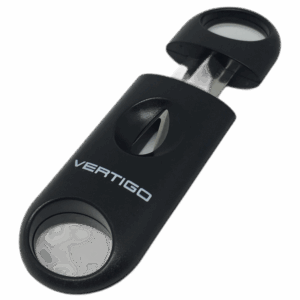
Cigar Cutter – by Vertigo


Humidor – Walnut with Window for 20 Cigars

Matt Chrome Double Blade 23mm Cigar Cutter

How to store your cigars
A cigar left out in ordinary room conditions dries out within days, becoming harsh, prone to cracking and difficult to keep alight. Cigar tobacco needs a stable, humid environment to stay in good condition, which is what a humidor is built to provide.
A humidor is a storage box, lined with Spanish cedar, designed to hold humidity at a stable level using a humidification device and monitored with a hygrometer. The cigar trade has long worked to a rough guideline of around 65 to 70% relative humidity and 18 to 21°C. The trade's shorthand for this is the "70/70 rule": 70% relative humidity at roughly 70°F, close to 21°C, treated as the reference point within that wider range. Outside that range, cigars either dry out and become brittle, or take on too much moisture and become difficult to draw or light. A new humidor generally needs seasoning before use: wiping the interior cedar with distilled water, then letting it sit closed with the humidification device active for a day or two before cigars are stored inside, so the wood itself is holding moisture rather than pulling it from the cigars.
For anyone not ready to buy a humidor, short-term storage in a sealed container with a small humidification pack can hold a handful of cigars in reasonable condition for a few weeks, though it is not a long-term substitute. McGahey lists a range of humidors for buyers ready to store cigars properly.
Cigar accessories you'll need
A cutter, covered above, is the first essential; McGahey stocks cigar cutters in straight, punch and V-cut styles. A torch lighter or long matches are generally preferred over a standard petrol lighter, because petrol-based fuel can leave a taste on the tobacco that affects the flavour of the smoke; butane torch lighters burn cleanly instead. McGahey lists cigar lighters built for this purpose. A hygrometer, usually built into or placed alongside a humidor, measures humidity so it can be checked and corrected rather than guessed at.
Readers who want a shorter, less involved introduction to cigar tobacco before committing to a full-size cigar may also want to look at cigarillos, a smaller, quicker-to-smoke related product.
Frequently asked questions
Do you inhale cigar smoke?
Generally, no. Most cigar smokers draw the smoke into the mouth to taste it, then release it, rather than drawing it into the lungs the way cigarette smoke is typically inhaled. This does not remove the health risks of cigar smoking: people who do not inhale are still exposed to nicotine and other toxic chemicals through the mouth and throat.
Are cigars healthier or safer than cigarettes?
No tobacco product is a safe alternative to another. Cigars and cigarettes both expose the person smoking them to nicotine and cancer-causing chemicals, and switching from one tobacco product to another is not a recognised way to reduce health risk.
Do cigars contain nicotine?
Yes. Cigars contain nicotine, and the amount varies considerably with size: a large cigar can contain as much tobacco, and therefore as much nicotine and toxic chemical exposure, as an entire pack of twenty cigarettes, since large cigars typically hold between five and twenty grams of tobacco.
How long do cigars last, and can you age them?
Kept in a properly maintained humidor, cigars generally stay in good condition for years, and some collectors deliberately age larger cigars for a decade or more as the flavour changes over time, though this varies by tobacco and wrapper type. Outside a humidor, most cigars start to dry out within days and become noticeably harsher within a few weeks.
What cigars did Winston Churchill smoke?
Churchill is widely documented as a lifelong cigar smoker, a habit traced to time he spent in Cuba in 1895, and Romeo y Julieta is the brand most consistently associated with him. The "Churchill" cigar size, roughly seven inches with a 47 ring gauge, is widely reported to have been named in his honour, though the exact origin story is disputed. This is noted here purely as historical background, not as any endorsement of cigar smoking.
Why were Cuban cigars illegal in the US?
In February 1962, President John F. Kennedy signed a full US trade embargo against Cuba, banning the import of Cuban goods, including cigars, in the political aftermath of the Cuban revolution. The story is well documented that Kennedy asked his press secretary to source around a thousand of his preferred Cuban cigars in the hours before he signed the order. That embargo has applied only to the United States. It has never restricted UK buyers, for whom Cuban cigars have always been legally available.
Resources
- Centers for Disease Control and Prevention, "Cigars" (Smoking and Tobacco Use), 2024. Reference for cigar tobacco content, nicotine exposure and health risk data cited above. https://www.cdc.gov/tobacco/other-tobacco-products/cigars.html
- Cigar Aficionado, "Two Romeo y Julieta Cigars From Winston Churchill Sell For Thousands." Reference for Winston Churchill's documented preference for Romeo y Julieta cigars. https://www.cigaraficionado.com/article/two-romeo-y-julieta-cigars-from-winston-churchill-sell-for-thousands
- IrishCentral, "John F. Kennedy snagged 1200 cigars before the Cuban trade embargo." Reference for the February 1962 US trade embargo and the cigar order preceding it. https://www.irishcentral.com/roots/history/john-f-kennedy-cigars
Conclusion
Choosing a first cigar comes down to a handful of factual decisions covered above: a manageable size, a mild to medium strength, a clean straight cut, a proper light and slow pace, and storage that keeps the cigar at a stable humidity and temperature. None of this changes the basic facts about tobacco use.nd slow pace, and storage that keeps the cigar at a stable humidity and temperature. None of this changes the basic facts about tobacco use.